
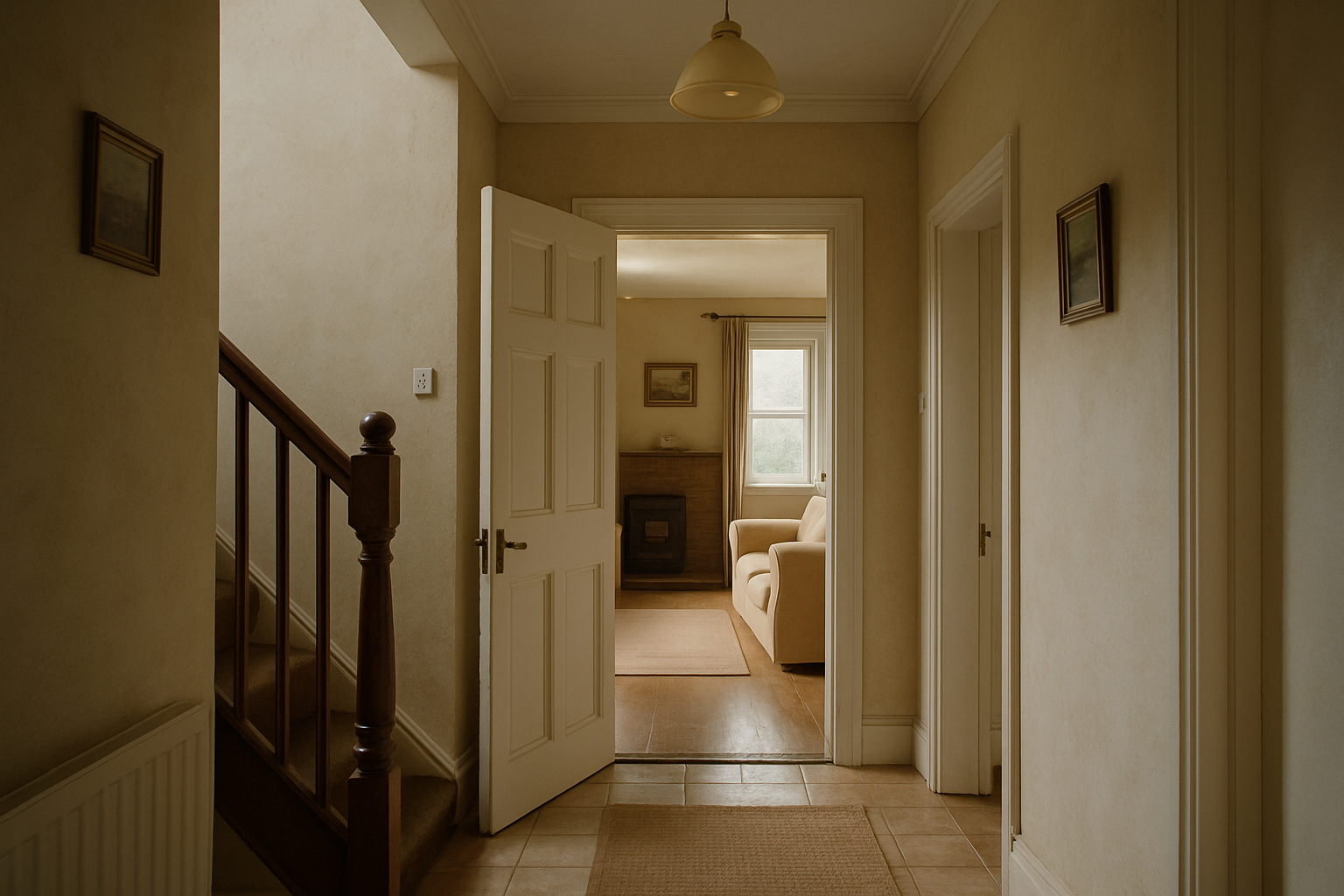
If you’ve ever looked at your room air readings and thought, “Nothing changed—why did the numbers?”, a simple answer is often the door. In most Irish homes, a door isn’t just a divider for noise and privacy; it’s also a control point for how air, heat, and moisture move around the house.
Because room air sensors (and even your own comfort) respond to what’s happening locally, the same room can behave like two different spaces depending on whether the door is open, closed, or sitting slightly ajar.
Doors change mixing: one room vs the whole house
When a door is open, air mixes more freely between rooms. Your “living room reading” can start to reflect what’s happening in the hall, kitchen, or adjacent spaces—especially in open-plan or partially open layouts that are common in renovated Irish housing stock.
When a door is closed, the room becomes more “its own system”. That can make changes feel sharper: humidity rises faster with normal activities, temperatures drift differently, and any stuffiness can build more quickly if there’s limited fresh-air exchange.
Open, ajar, closed: three different airflow behaviours
- Door open: faster mixing. Readings may smooth out, spikes can reduce, and the room may look more stable—because it’s being averaged with nearby air.
- Door ajar: unpredictable mixing. A small gap can create a concentrated pathway that either helps relieve a room or creates a noticeable draft depending on wind, heating, and pressure differences.
- Door closed: slower mixing. The room’s own heat and moisture sources show up more clearly; changes can look more dramatic, especially overnight.
Why bedrooms often look ‘different’ overnight
A classic example is a bedroom with the door closed. Overnight, even without doing anything unusual, a room can become warmer and more humid due to normal occupancy. If windows are shut and the door stays closed, the air in the room can drift away from the rest of the home’s conditions.
In the morning, simply opening the door can cause a quick shift as the room air mixes with the hall—sometimes making it look like “ventilation worked instantly” when what actually happened was rapid mixing between spaces.
Hallways: the hidden ‘reference’ space
In many Irish homes the hallway sits between the outside door, the stairs, and multiple rooms. That makes it a common mixing zone, and it can influence readings in nearby rooms the moment doors open.
If your hall is cooler (common near an external door), opening an internal door may briefly pull a room temperature reading down. If the hall is warmer (e.g., heat rising on stairs), it can do the opposite.
How to interpret readings with door position in mind
- Compare like with like: if you’re comparing two rooms, keep door position consistent during your comparison window.
- Watch trends, not moments: a 5–20 minute change after opening a door may be mixing rather than a true improvement or deterioration.
- Use simple notes: jot down “door closed overnight” or “doors open during cooking” for a few days. Patterns become obvious quickly.
- Think about purpose: a closed-door bedroom might need a different routine than an open-plan living area, even if the same sensor is used.
This article is for general home insight only. Indoor air readings can be influenced by many factors—heating schedules, weather, occupancy, window use, and building leakage—so avoid drawing big conclusions from a single reading or a short spike.
A practical takeaway for everyday Irish living
Door position is one of the simplest “controls” you already use daily—and it can meaningfully change what your room air data looks like. If you want clearer, calmer interpretation, start by asking one question each time you notice a shift: “Was the door open, closed, or just ajar?”