
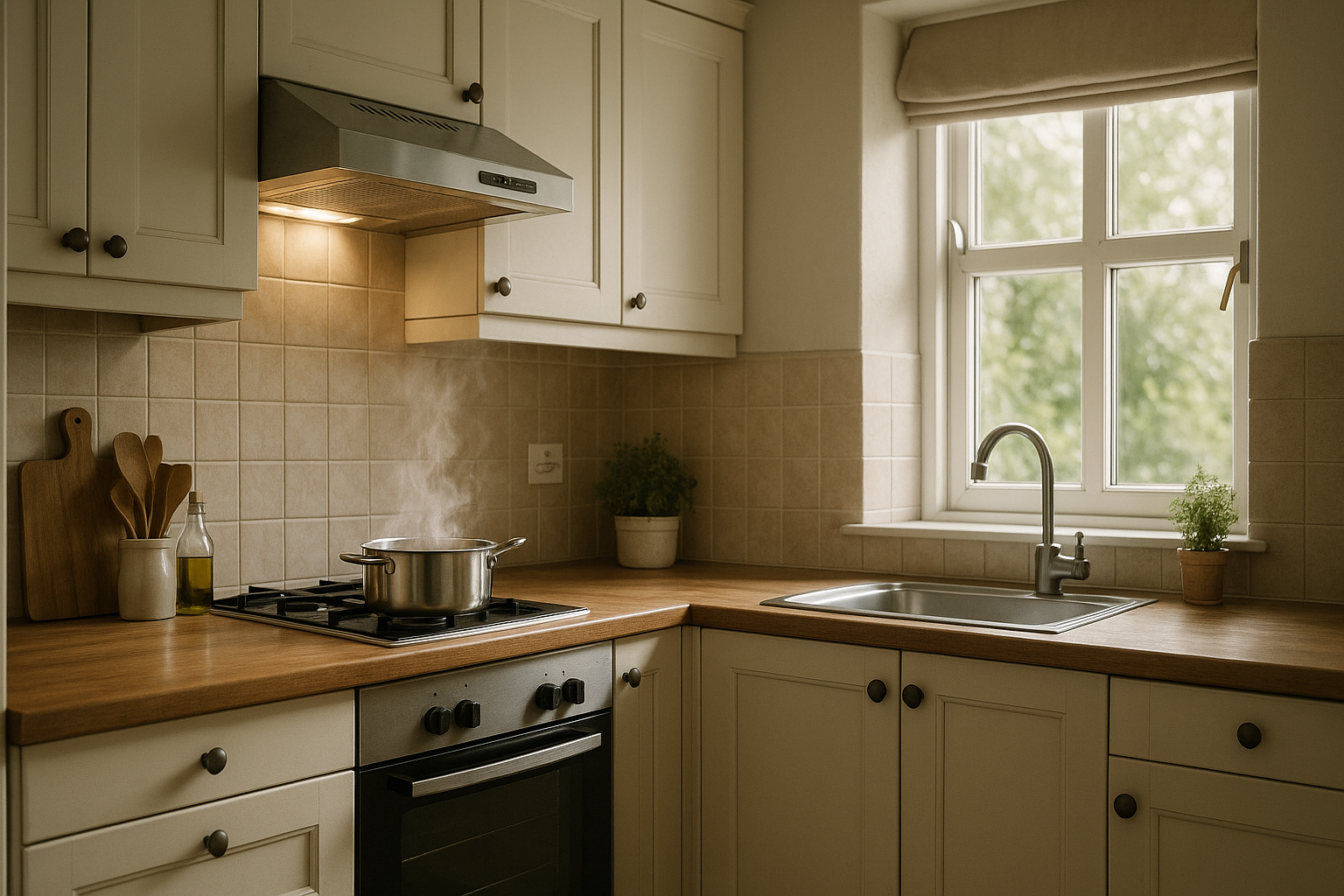
In many Irish homes, the kitchen is the most frequent “moisture event” of the day. A kettle boil, pasta pot, or a slow stew can add a surprising amount of water vapour to the air. That doesn’t automatically mean there’s a problem—but it does explain why windows mist up, why rooms can feel a bit heavy, and why humidity readings often jump around mealtimes.
The useful insight is this: cooking moisture tends to arrive in short, predictable bursts. Once you recognise the pattern, you can time ventilation so humidity doesn’t linger longer than it needs to.
What actually adds moisture during cooking
Most cooking moisture comes from water turning into vapour, then mixing into the room air. Some activities create quick spikes; others create a slower, longer rise that can be harder to clear.
- Boiling and simmering: steady vapour release, especially from uncovered pots.
- Steaming (veg, dumplings, rice): high vapour output in a short time.
- Oven cooking: generally less moisture than boiling, but can still add humidity (especially with roasts, trays of veg, or when opening the oven door repeatedly).
- Frying and stir-frying: less water vapour than boiling, but plenty of warm air movement that can carry moisture around the space (and cooking aerosols).
- Dishwashing and drying racks: warm water and evaporation after cooking can keep humidity elevated even when the hob is off.
Why humidity rises fast in Irish kitchens
Two common features of Irish housing help explain the speed of the rise:
- Relatively airtight upgrades: modern windows, draft-proofing, and insulation improve comfort and energy use, but can reduce “accidental” ventilation that used to carry moisture away.
- Cooler surfaces in winter: when outdoor temperatures drop, walls, glazing, and even tiled floors can be colder. Moist air meeting cool surfaces is more likely to show up as condensation.
That’s why you might see a humidity bump even with modest cooking—and why it can show up first on glass and colder corners rather than in the middle of the room.
The typical daily pattern: spikes and lingering tails
In real homes, humidity from cooking often looks like a wave: a sharp rise when cooking starts, then a slower fall afterwards. The “tail” matters because it’s the period when moisture can drift into other rooms, settle on cooler surfaces, or make the home feel stuffy.
- Breakfast: kettle use and brief boiling can cause a short spike that clears quickly if extraction is used.
- Dinner prep: the biggest rise tends to happen here—multiple burners, longer cooking, and dishwashing afterwards can extend the tail.
- Weekend cooking: longer oven use, baking, or big pots can keep humidity higher across much of the day, especially in open-plan spaces.
Small ventilation choices that can reduce lingering moisture
You don’t need to turn the kitchen into a wind tunnel. The goal is simply to remove moist air at the time it’s being produced, rather than trying to deal with it later.
- Use extraction early: switch the cooker hood or extractor on before steam builds up, not after windows start to fog.
- Keep lids on where you can: even partially covering pots can noticeably reduce vapour release.
- Run extraction after cooking: letting the fan continue for a short period helps clear the “tail.”
- Mind the doorway effect: closing a kitchen door (if you have one) can limit moisture travelling into cooler rooms.
- Add brief window ventilation when practical: a small opening for a short time can speed up clearing, especially if your extractor recirculates rather than vents outside.
Comfort varies by household. If outdoor air is cold or noisy, you may prefer shorter bursts of ventilation paired with steady extraction, rather than leaving windows open for long periods.
What to watch for around your home
You’ll often get the best clues from your home’s “signals” rather than any single number. Notice when and where moisture shows up, and how long it takes to clear.
- Windows misting during or after cooking, especially in adjacent rooms.
- A lingering “heavy” feeling in open-plan areas after dinner.
- Condensation on colder surfaces (glass, external walls, tiles) later in the evening.
- Humidity that stays elevated long after the hob is off—often linked to dishwashing and drying.
If these patterns sound familiar, it doesn’t mean something is wrong—it simply highlights that cooking is a predictable driver of indoor humidity. With a few timed habits, many households find the kitchen clears faster and the rest of the home feels more consistently comfortable.