
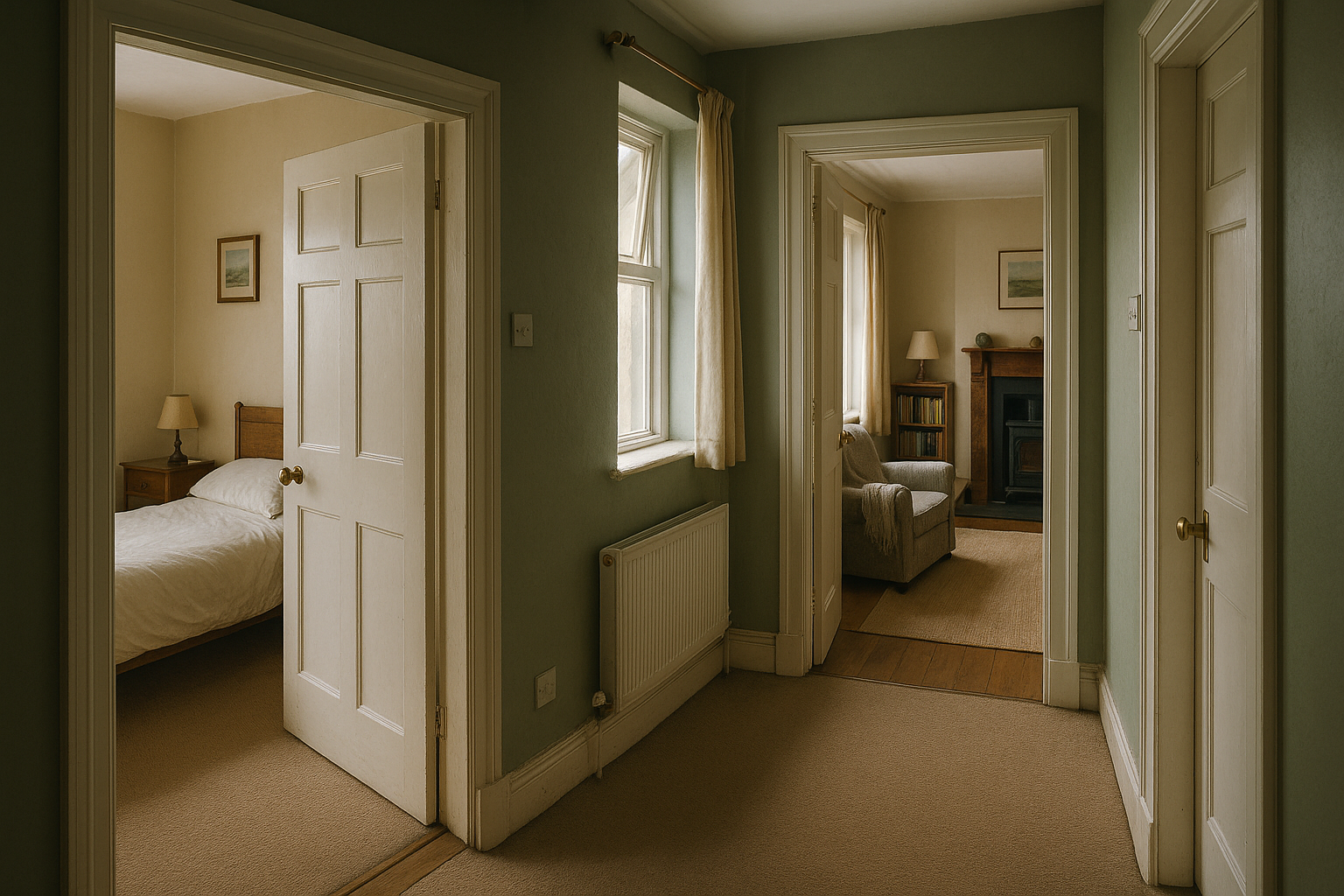
Irish homes often have rooms that behave very differently—sometimes even when the house is the same age, the same heating is on, and the weather outside is identical. One bedroom can feel crisp and comfortable while another feels heavy or clammy. The mistake is assuming the “odd” room is automatically a serious issue.
A calmer approach is to compare two rooms in a way that separates normal variation (sunlight, use, airflow) from signals that are worth following up. You’re not trying to prove something is wrong—you’re trying to understand what’s different.
Start by choosing the right comparison
Comparisons can mislead when the rooms aren’t playing the same game. A bathroom after showers will nearly always look “worse” than a spare room that stays closed and unused. Pick a comparison that makes sense for your question.
- If you’re comparing comfort: choose two bedrooms at night, or two living spaces in the evening.
- If you’re comparing moisture: compare rooms after similar activities (e.g., both after people have been in them for an hour).
- If you’re checking the effect of a habit: keep everything else the same and change just one thing (window position, door position, extractor use).
Compare patterns, not moments
One-off snapshots cause most of the overreaction. Weather swings, a pot simmering, a long shower, or three extra people in the house can temporarily shift conditions. What matters is the repeated pattern: does the room recover afterwards, and how quickly?
- Pick two or three consistent check-in times (e.g., morning, evening, after cooking).
- Note what happened recently (shower, cooking, clothes drying, guests, fireplace/stove use).
- Look for “recovery”: does the room return to its usual feel after you ventilate or heat as normal?
Use a simple three-part lens: heat, moisture, airflow
Most room-to-room differences come down to three interacting factors. When you compare rooms, you’ll get clearer answers by checking each one rather than treating the room as mysteriously “bad”.
- Heat: Is one room colder because it’s over a garage, has more external walls, or the radiator is undersized/blocked by furniture?
- Moisture: Is one room getting regular bursts of moisture (showers, cooking steam, drying clothes, lots of people)?
- Airflow: Does one room have less fresh air because windows are kept shut, trickle vents are closed, doors stay closed, or it’s at the end of a draft-free corridor?
Watch for “hidden differences” that explain a lot
Two rooms can look similar on paper, but small practical differences change how they behave. These often explain why one room feels stuffier or gets more condensation on cold mornings.
- Sun and wind: a south-facing room may warm and dry faster; an exposed side of the house may cool quicker.
- Door habits: a room that stays shut can trap warm moist air (or trap stale air if ventilation is limited).
- Furniture placement: wardrobes or beds tight to an external wall can reduce air circulation locally.
- Curtains and blinds: heavy curtains drawn early can make windows colder, increasing the chance of condensation.
- Extractor routines: kitchens/bathrooms often differ not by the fan itself, but by how consistently it’s used and for how long after.
A calm comparison checklist (10 minutes)
If you want a quick, low-drama way to compare two rooms, run this checklist once a day for a few days. You’ll usually spot a habit or layout difference that you can test gently.
- Are both rooms being used similarly today (people, pets, laundry, cooking/showering nearby)?
- Were doors in the same position for the last few hours (open/closed)?
- Were windows/vents in the same position for the last few hours?
- Is heating reaching both rooms similarly (radiator warm, not blocked, similar schedule)?
- Do you see signs of condensation at the same time in both rooms (windows, cold corners), or only in one?
- After normal airing/heating, does the “worse” room catch up—or does it lag consistently?
If you’re using readings from a home monitor, treat them like context, not a verdict. A small difference between rooms is normal; the useful insight is how each room responds to everyday events (showers, cooking, bedtime) and how quickly it settles afterwards.
If you change something, change one thing
Overreacting often looks like making five changes at once—then not knowing what actually helped. A calmer method is to try one adjustment for a couple of days and see if the pattern shifts.
- Try keeping the door open for set periods (e.g., 2 hours in the evening) and compare the feel/condensation pattern.
- Run the bathroom or kitchen extractor for longer after the main moisture event, and note recovery time.
- Move a large piece of furniture a few centimetres off an external wall to improve local airflow.
- Aim for steadier heating in the cooler room rather than big bursts that still leave cold surfaces.
When to take it a step further
Sometimes a room consistently underperforms despite sensible habits. That doesn’t automatically mean the worst—but it can be a sign that the room needs a closer look (insulation gaps, ventilation limitations, drafts, or cold bridging).
If you repeatedly see heavy condensation, persistent damp patches, or ongoing damage to paint/plaster in one room, consider getting an experienced professional to assess the space and the building fabric. The most helpful outcomes usually come from diagnosing the cause rather than chasing quick fixes.