
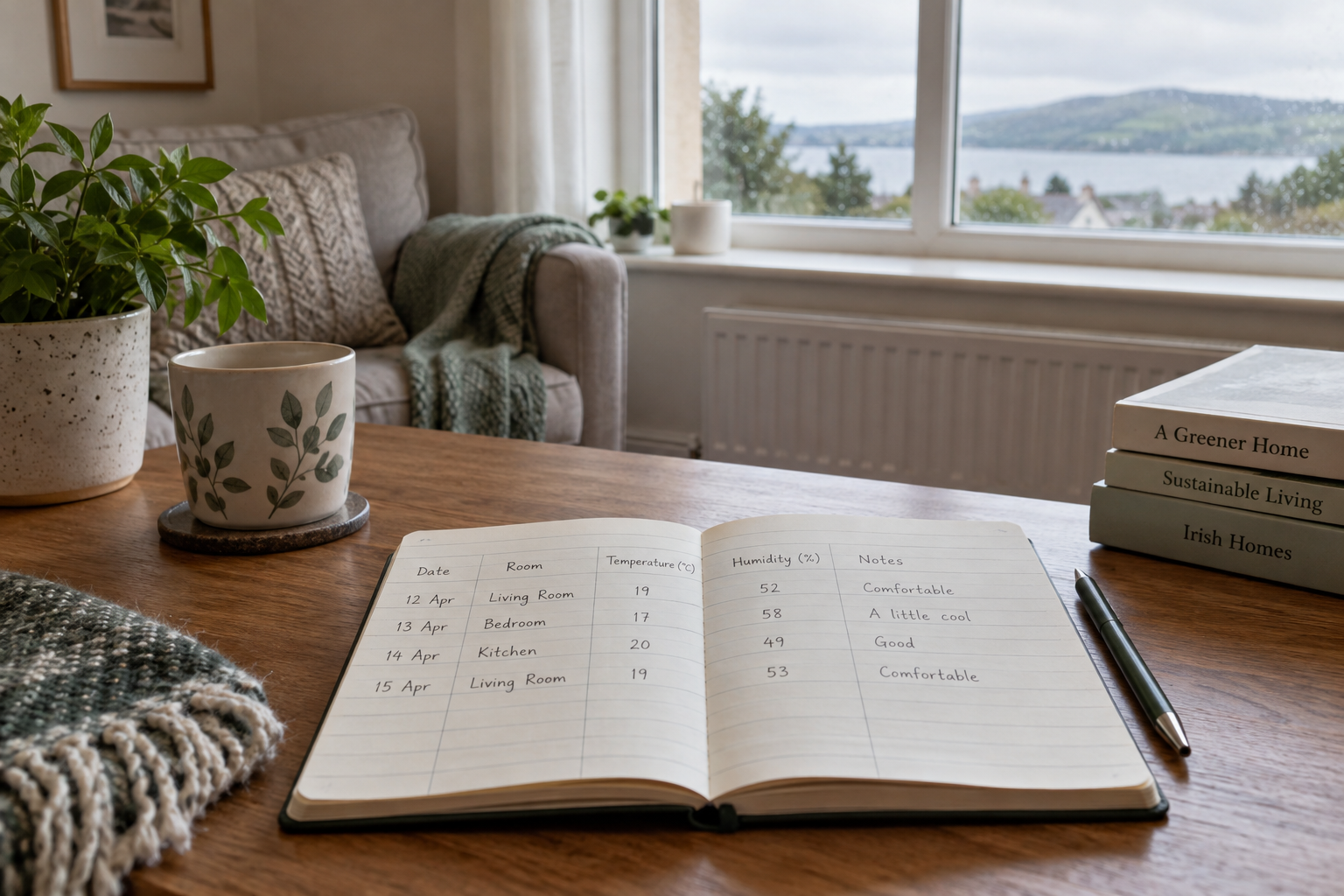
“Comfort” is often described in vague terms—too cold, too damp, a bit stuffy. A simple record turns those impressions into a clearer picture you can act on. For Irish homes, where weather swings and busy households can change indoor conditions quickly, a small habit of noting what’s happening in each room can be surprisingly useful.
This isn’t about chasing perfect numbers or proving a point. It’s about spotting patterns: when rooms feel uncomfortable, what might be contributing, and which changes are worth testing first.
What a useful room comfort record looks like
A good record is simple enough that you’ll actually keep it. If it takes more than a minute, it usually won’t last. Aim for short, consistent entries rather than detailed diary-style notes.
- Date and time (morning / afternoon / evening is often enough)
- Room (e.g., main bedroom, kitchen, sitting room)
- Temperature (approximate is fine)
- Relative humidity (if you have it)
- What was happening (shower, cooking, windows opened, clothes drying, tumble dryer used, stove lighting, lots of visitors)
- Heating and ventilation context (heating on/off, extractor used, trickle vents open/closed)
- A quick comfort note (stuffy, chilly, draughty, window condensation, lingering odours)
Tip: Keep your categories fixed. When the questions stay the same, patterns show up faster.
When to take notes (without it taking over your life)
For most households, a two-week snapshot is enough to learn something useful. You’re looking for repeatable situations, not one-off odd days.
- Twice daily baseline: once in the morning and once in the evening
- Add “event notes”: after showers, during cooking, after drying clothes indoors, or when a room feels noticeably uncomfortable
- Include a few windy/rainy days if possible—Irish weather can change how a home behaves
What patterns you’re trying to spot
A comfort record helps you move from “this room is always damp” to “humidity rises for three hours after showers” or “the back bedroom cools faster on windy nights”. Those are the kinds of insights that lead to practical next steps.
- Humidity spikes linked to specific activities (showers, cooking, clothes drying)
- Rooms that cool down quickly compared to others (possible heat loss or draught paths)
- Times when air feels stale (often connected to closed doors, closed vents, or low background ventilation)
- Condensation appearing at predictable times (often early morning or after high-moisture activities)
- Differences between similar rooms (e.g., two bedrooms behaving differently suggests a local factor like window condition, curtain habits, or airflow)
Make it easier: a simple template you can copy
You can keep this on paper, a notes app, or a spreadsheet. The best format is the one you’ll actually use.
- Date/time:
- Room:
- Temp:
- Humidity (if available):
- Heating on? (Y/N):
- Ventilation used? (window/extractor/vents):
- What was happening (1 line):
- Comfort note (1 line):
How to use your record to decide what to try next
After 10–14 days, scan your notes for repeating situations. Then choose one small change to test for a week so you can see whether it makes a difference in your own home.
- If humidity rises mainly after showers: test using the extractor consistently and leaving the bathroom door closed for a period afterwards (where safe and practical)
- If a bedroom feels stuffy overnight: test a small, consistent ventilation routine and note any difference in morning comfort
- If one room is much colder than others: compare heating schedule, radiator performance, curtains/blinds use, and door positions—record what changes you try
- If condensation is frequent on specific windows: note weather conditions and household activities alongside when it appears, then discuss window/ventilation options with a professional if needed
A record won’t diagnose a problem on its own, but it can help you ask better questions and avoid random trial-and-error.
Bring it to the people who can help
If you’re speaking with a plumber, heating technician, window installer or ventilation specialist, a short comfort record can speed up the conversation. Instead of general complaints, you can show: where, when, and under what conditions discomfort tends to happen.
That clarity is valuable—especially in busy Irish households where multiple everyday activities (cooking, showers, laundry) overlap and affect indoor air and comfort in ways that are easy to underestimate.