
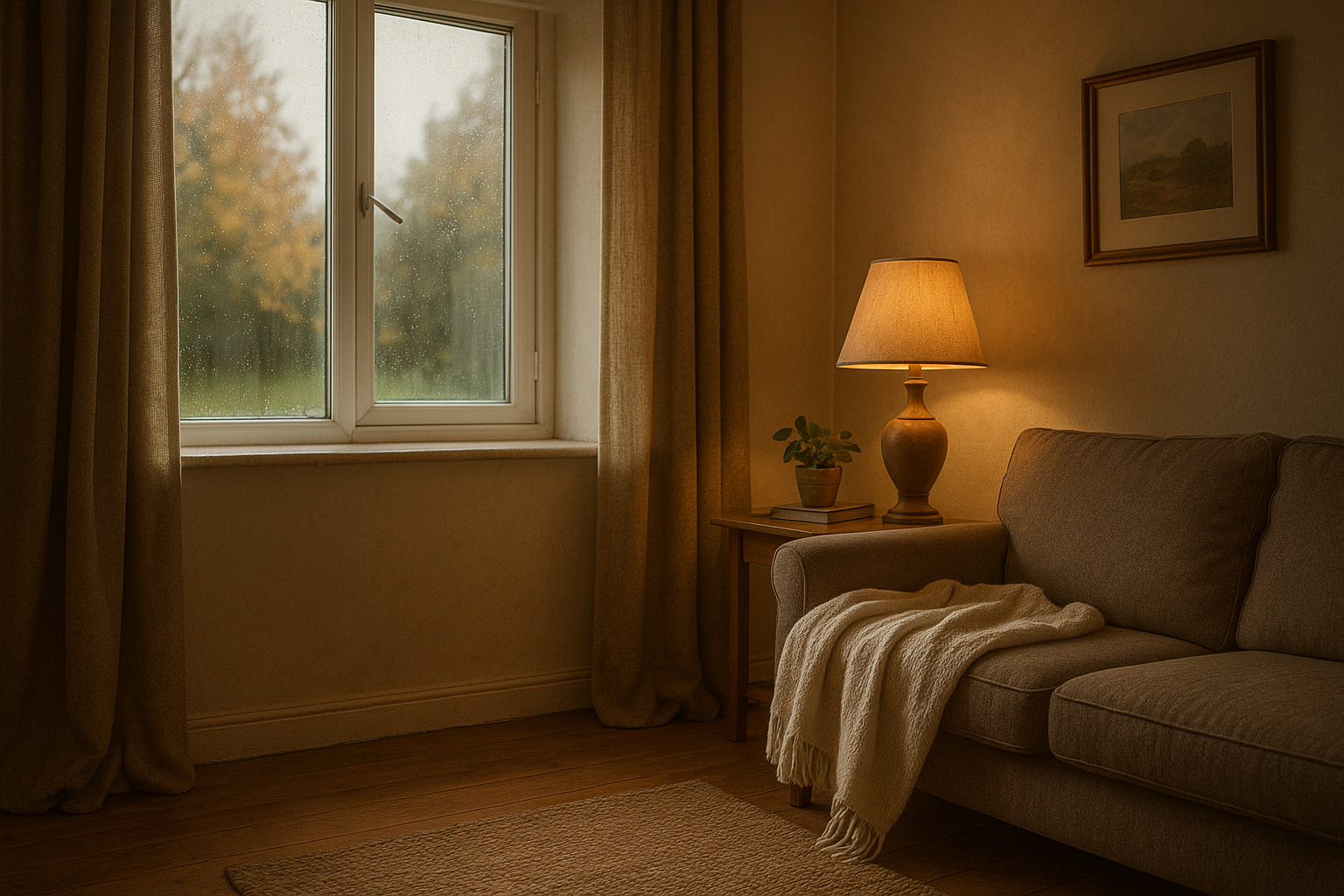
Autumn is when many Irish homes quietly shift into “closed-up mode”: windows stay shut more often, heating starts to come on, and damp outdoor air can linger indoors after showers, cooking, or drying laundry. The result isn’t always obvious—comfort drifts gradually until you notice heavy window condensation, stuffy bedrooms, or a room that never quite feels fresh.
This simple routine is designed to be calm and realistic: a few quick checks each week, plus a couple of seasonal tasks when the weather turns. It won’t “solve everything”, but it helps you spot small changes early and adjust your habits room by room.
1) Pick two moments: a morning check and an evening check
Comfort changes through the day. A quick look in the morning (after a night with doors closed) and again in the evening (after cooking, showers, and heating) gives you a more useful picture than a single reading at midday.
- Morning (bedrooms + landing): notice how the air feels when you first open the door—stale, fresh, cool, clammy?
- Evening (kitchen + main living area): check how quickly cooking steam clears and whether windows are fogging up.
- If you track temperature and humidity, note the numbers—but also write down what you observed (condensation, odours, stuffiness).
2) Do a weekly ‘moisture walk’ (5 minutes)
Once a week, do a quick lap of the house. You’re not hunting for problems; you’re just looking for patterns that repeat in autumn.
- Windows: check for frequent fogging, water beading, or damp sills—especially in bedrooms and bathrooms.
- Corners and behind furniture: glance at external corners, behind wardrobes, and around window reveals where air can be cooler.
- Soft furnishings: notice if a room smells musty or textiles feel slightly damp to the touch.
- Utility/laundry areas: check if drying clothes indoors is making the space feel heavy or lingering damp.
Tip: If you find a recurring “damp-feeling” spot, try changing one thing for a week (e.g., door position, a short ventilation burst after showers, moving a wardrobe slightly off an external wall) and see if the pattern changes.
3) Check the three everyday drivers: heat, moisture, and fresh air
Indoor comfort is often a balancing act between warmth, moisture levels, and ventilation. In autumn, it’s easy to add heat while accidentally reducing fresh air—especially when rain and wind make windows less appealing.
- Heat: aim for steady comfort rather than big swings (cold house → high heat → windows fogging).
- Moisture: pay attention to showers, cooking, and indoor clothes drying—these can raise indoor moisture quickly.
- Fresh air: use short, intentional ventilation moments, particularly after moisture-heavy activities.
4) Give kitchens and bathrooms a ‘steam clearance’ test
A practical comfort check is how quickly steam clears after you’ve made it. If it lingers, the room may not be clearing moisture efficiently on that day’s weather conditions.
- After a shower: note whether mirrors and tiles stay wet for a long time, and whether the room still feels humid 20–30 minutes later.
- After cooking: see if odours and moisture clear, or if they drift into hallways and upstairs rooms.
- If you use an extractor, confirm it’s actually running as expected and that the room door position helps (sometimes slightly open works better than fully closed).
5) Do a ‘bedroom reset’ twice a week
Bedrooms can feel comfortable at bedtime yet become stuffy overnight. A small reset a couple of times a week can make the room feel noticeably fresher—especially in autumn when windows are kept shut for longer.
- In the morning: pull back bedding for a short period to let the bed air.
- Open the door for a while (even if windows stay closed) to encourage air movement through the room.
- Check for window condensation and wipe it if needed—then consider a brief ventilation moment to help the room dry out.
6) One monthly check: look for ‘hidden cold spots’
As the season cools, some areas of the home respond differently—external corners, rooms with less sun, or spaces with limited airflow. A monthly check helps you notice which rooms are more sensitive so you can adapt your routine.
- Rooms you heat less often (spare rooms, home offices): do they feel colder or slightly clammy compared to the rest of the house?
- Storage areas (wardrobes against external walls): is there a ‘stale’ smell when you open doors?
- Hallways and stairwells: do they feel noticeably cooler, suggesting heat is concentrated in one zone?
Comfort isn’t just about adding heat—air movement and where moisture goes in your home matter too. Small layout changes (like keeping an internal door open for part of the day) can sometimes make a bigger difference than you’d expect.
How Healthy Home Intelligence can help (without adding hassle)
Many homeowners start with a routine like this, then decide they’d like clearer visibility—especially in rooms that feel “fine” most of the time but occasionally swing into stuffy, damp, or uncomfortable. Tracking patterns over days and weeks can make it easier to understand what’s happening and when.
Healthy Home Intelligence focuses on practical home insight: understanding comfort trends, spotting changes early, and supporting better day-to-day decisions. The goal is a home that feels consistently comfortable through autumn—using simple habits informed by real patterns in your own rooms.