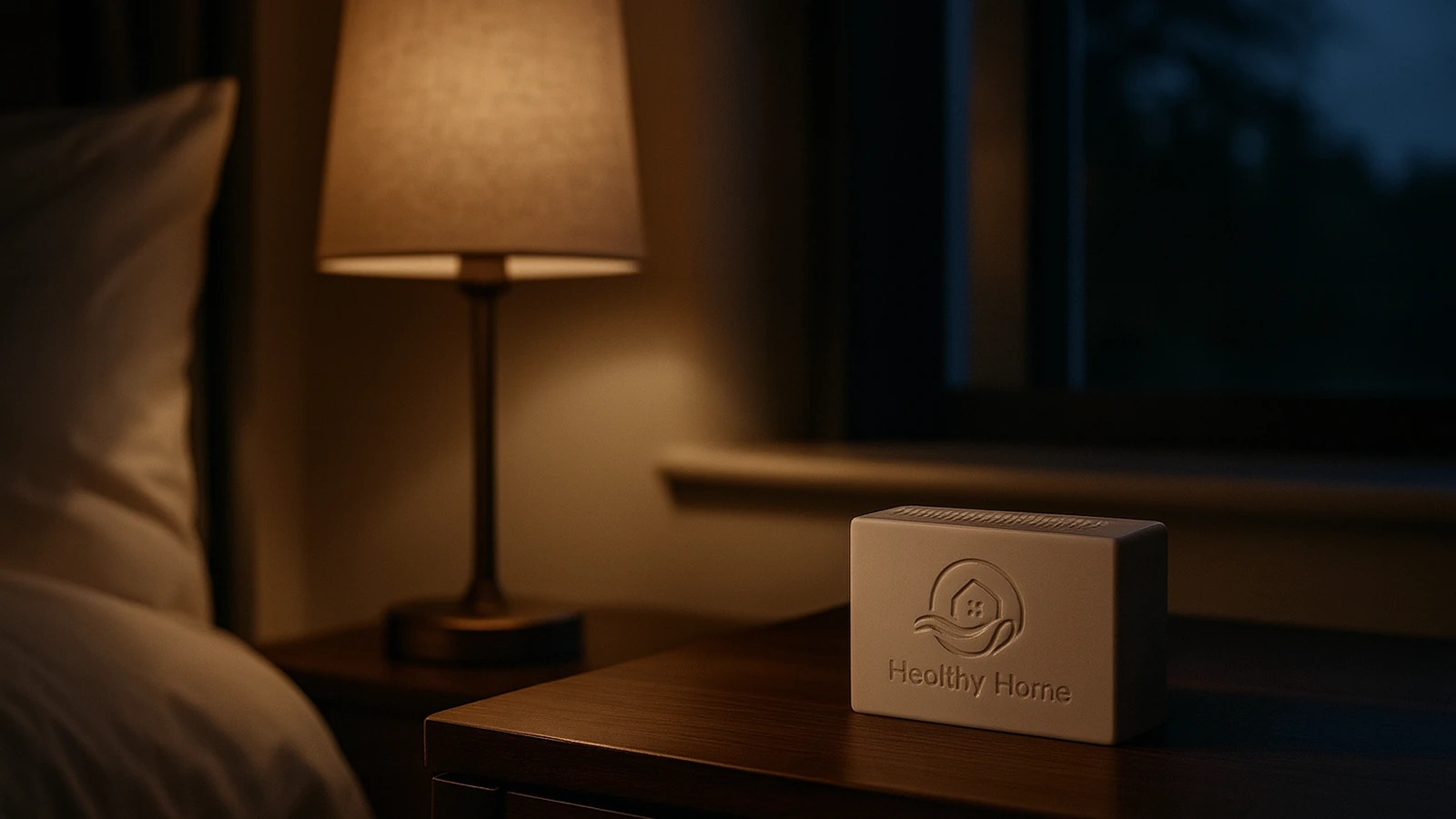
Daytime rooms are busy. Doors open and close, heating cycles, people move between spaces, and kitchens or bathrooms add short bursts of moisture and warmth. Overnight, many Irish homes settle into a quieter rhythm: fewer door movements, longer stretches in bedrooms, and heating that may drop or hold steady. That quieter stretch can make room patterns easier to notice.
Healthy Home Intelligence is built around calm pattern reading in the rooms people actually use. Overnight patterns are not a score for the whole house, and they are not a diagnosis. They are simply another way to understand how a lived-in room behaves when it is closed and occupied for hours at a time.
What an overnight pattern can quietly show
A bedroom may cool slightly as heating settles while humidity drifts with occupancy in a closed space. A spare room left unused may hold a steadier overnight shape than a lived-in bedroom next door. A living room closed after evening use can look different again once people leave and the house quiets.
None of those examples is a verdict. They are common ways rooms behave. The useful habit is to notice whether the same overnight shape repeats across several nights in the same room, rather than treating one chart as a conclusion.
- Closed bedrooms overnight can show different comfort pairing than open living spaces earlier in the evening.
- Heating setbacks and door habits often explain more of the night chart than any single reading.
- A room that recovers by morning is a different story from one that keeps the same shape night after night.
One warm or humid night after guests visit is a weak snapshot. One cooler night after airing the house is the same. Overnight patterns become more useful when the same room shows a repeating shape across several days — and even then, the pattern only adds context for calmer decisions.
Compare the same room across several nights before expanding to more spaces. Note obvious habits first: closed doors, extract after evening showers, drying laundry indoors, and whether a room recovers when air can move in the morning. Irish homes often show seasonal outdoor influence as well; that is normal context, not proof that outdoor weather alone explains every indoor change.
Healthy Home Intelligence is not a medical device. It does not diagnose illness. It does not make medical claims. It does not claim to prevent mould, illness, property damage, or poor air quality. It does not certify ventilation compliance or declare a building healthy. Sensors read conditions in the air of a room. They cannot see inside walls, under floors, or behind furniture.
HHI is designed to help homeowners understand room-level comfort patterns earlier. Join the early-access list for launch updates, pilot invitations and product availability. Healthy Home Intelligence is in prelaunch. The public insights library is here so people can understand the approach before wider availability.
Educational only. Not medical advice. HHI does not replace a mould survey, property inspection, ventilation specialist, remediation professional, or professional advice where visible damp, mould, defects, combustion concerns, or persistent problems are present. Monitoring may indicate conditions worth a closer look; it does not certify the building or guarantee outcomes.