Homes are not one single environment. A closed bedroom overnight, a living room used all evening, a kitchen after cooking, a home office behind a shut door, and a hallway that people only pass through can each behave differently. Treating the house as one average can hide the room-level context that actually helps people understand what is going on.
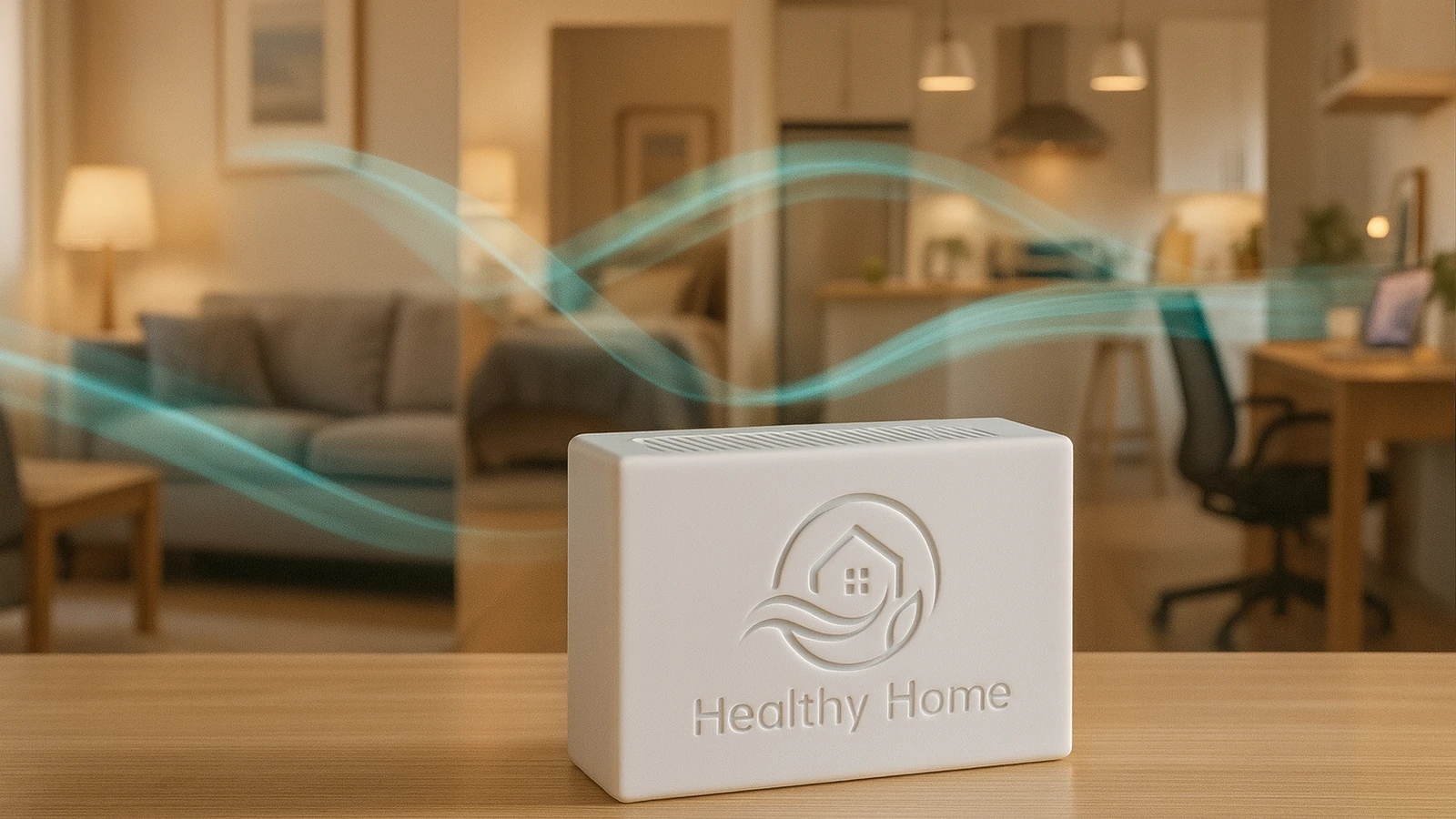
Healthy Home Intelligence sensors are room devices that measure conditions such as temperature, humidity, and how occupied air appears to change over time. That is why one sensor in a main used room can give more useful context than guessing from a single central reading. It does not mean every room needs a device. It means the rooms people actually live in are worth representing when you want calmer, earlier decisions.
Homes are not one single environment
Temperature, humidity, and how quickly occupied air appears to be replaced can diverge from room to room. Doors stay closed for privacy or quiet. Heating is uneven. Moisture sources are local. Occupancy comes and goes. A chart from one location can look settled while another room is telling a different story.
Room-level monitoring exists to make those differences visible. The aim is not to score the house. The aim is to help homeowners see patterns in the places that matter day to day.
Why main used rooms matter
Main used rooms are where people spend long stretches: sleeping, sitting, working, cooking. Those rooms accumulate occupancy, door habits, and moisture or ventilation behaviour that a little-used spare room may never show.
Transitional spaces still matter for circulation, but they are often a weak stand-in for lived-in rooms. A landing or hallway can mix with several openings and still fail to explain a closed bedroom. Starting with main used rooms can show patterns in how the home feels and recovers.
How individual rooms behave differently
A bedroom is often smaller, occupied for hours, and closed overnight. Humidity and occupied-air patterns can shift while the rest of the home looks ordinary. Watching that room over several nights can show whether it recovers when the door opens or a window habit changes.
A living room may have more people, more door movement, and a different heating rhythm. A kitchen can show short moisture spikes after cooking or washing that then settle — or that linger if extract and door habits leave the room poorly mixed. A home office can sit closed for much of the day with one person in a small volume of air.
A hallway is useful for contrast, not as a whole-home verdict. Comparing a hallway with a main used room can show why a single central reading is easy to over-read. The useful question is whether the rooms people use keep behaving unlike each other across several days.
Why patterns matter more than one reading
One spike is a weak snapshot. Guests, a long cooking session, a closed workday, or an unusual evening can create a short climb that later recovers. Repeated patterns are more informative: the same late-night bedroom behaviour, the same slow recovery after showers, the same home-office climb on working days.
Trend history supports earlier decisions because it separates ordinary use from a room that keeps diverging. Even then, a pattern may indicate conditions worth a closer look. It does not prove a defect, and it does not forecast a specific outcome.
What room-level monitoring can help reveal
With sensors in main used rooms, homeowners can help reveal whether rooms recover when air can move, whether moisture or occupancy patterns repeat, and whether one room keeps diverging from neighbouring spaces. That room-level context can show patterns a hallway average may miss.
Healthy Home Intelligence is designed to help homeowners understand those patterns earlier — calmly, without turning the house into a laboratory. Monitoring supports decisions; the homeowner acts on what they see.
What HHI does not claim to do
Healthy Home Intelligence is not a medical device. It does not diagnose illness. It does not make medical claims. It does not claim to prevent mould, illness, property damage, or poor air quality. It does not certify ventilation compliance or declare a building healthy.
HHI does not replace a mould survey, property inspection, ventilation specialist, remediation professional, or professional advice where visible damp, mould, defects, combustion concerns, or persistent problems are present. Sensors read conditions in the air of a room. They cannot see inside walls, under floors, or behind furniture.
Practical next steps
If you want better room-level context, begin with the main used rooms rather than trying to cover every space at once. Compare the same rooms across several days. Review obvious habits first: closed doors, window and vent use, extract after moisture-producing activities, and whether a room recovers when air can move.
If a pattern keeps repeating alongside visible damp, mould, suspected defects, or combustion concerns, professional investigation may still be needed. Do not treat a calm chart as proof that a hidden problem cannot exist, and do not treat a repeating chart as proof of a specific diagnosis.
Get early access
HHI is designed to help homeowners understand room-level patterns earlier. Join the early-access list for launch updates, pilot invitations and product availability.
Healthy Home Intelligence is in prelaunch. The public insights library is here so people can understand the approach before wider availability.
Educational only. Not medical advice. HHI does not replace a mould survey, property inspection, ventilation specialist, remediation professional, or professional advice where visible damp, mould, defects, combustion concerns, or persistent problems are present. Monitoring may indicate conditions worth a closer look; it does not certify the building or guarantee outcomes.